Tuff Shed New Detached ADU: The Los Angeles Owner’s Guide
If your Tuff Shed has been converted or is being planned as a new detached ADU in Los Angeles, the parts that most often need replacing are the door hardware, roof flashing, and foundation anchors tied to the shed’s original build. A new detached ADU conversion typically runs $85,000 to $220,000 in Los Angeles depending on site prep, utility trenching, and the condition of your Tuff Shed shell, and Lodgewick ADU Los Angeles stocks the Tuff Shed-compatible components needed to keep that conversion moving. Most owners call us because a door has started sagging, a roof seam is leaking after the first winter rains, or a permit inspection flagged a part that wasn’t up to L.A. building code. Russ Delmar and our team have seen the same few part failures repeat across dozens of Tuff Shed-based ADUs in Los Angeles, and we’ll walk through each below.
Which Tuff Shed Models This Applies To
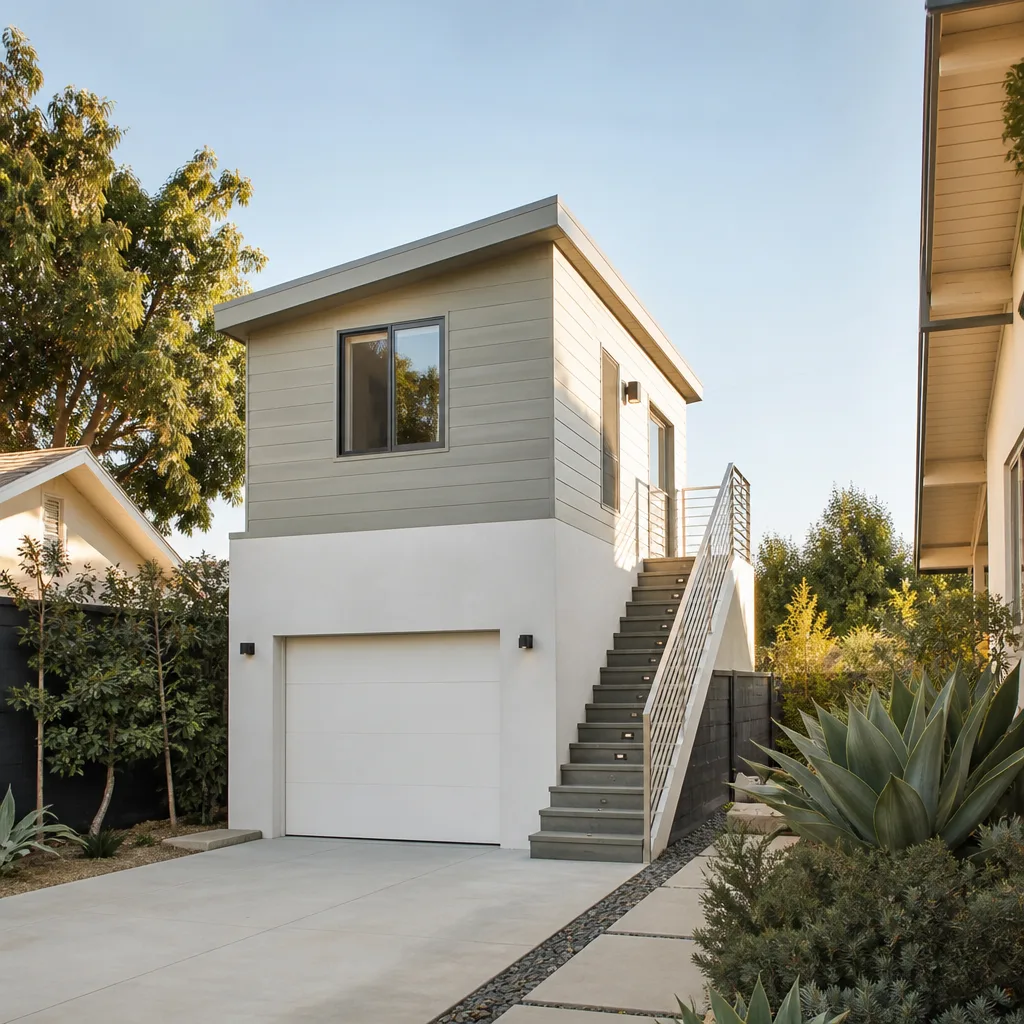
Tuff Shed builds several lines that end up as detached ADUs in Los Angeles backyards, and the part compatibility shifts by series. The Premier Pro Tall Barn and Premier Ranch models are the two we see converted most often because their 8-foot to 10-foot interior ceiling heights actually clear L.A.’s minimum ceiling requirement for habitable space without a roof rebuild. The standard Premier and Classic series often require additional work before they qualify as a new detached ADU, which changes which parts you’ll need at the rough-in stage.
Here’s the compatibility gotcha most Los Angeles owners don’t know until inspection time: Tuff Shed manufactures its doors to shed industry specs, not residential building code specs. The door frames are frequently too shallow for an egress-rated, fire-rated door assembly, and the sill plates are often untreated at the factory. If your Tuff Shed is under five years old, you can usually identify the exact series on the metal ID plate attached to the interior wall near the door jamb. If that plate is gone, measure the stud spacing. Premier Pro series uses 24-inch-on-center studs; the standard Premier and Classic use 16-inch-on-center. We keep OEM Tuff Shed hardware for door tracks, hinges, and roll-up door assemblies in stock, and for the code-critical parts like fire-rated doors and anchor bolts, we use quality aftermarket equivalents that match the load requirements L.A. Building and Safety actually enforces.
Signs Your Tuff Shed New Detached ADU Is Failing
- Door sag that won’t adjust out. Tuff Shed’s factory hinges are rated for shed duty, meaning occasional use. Once you’re opening and closing the door multiple times daily as a residence, the hinge mounting pulls loose from the frame. The underlying cause is usually fastener tear-out in the wood jamb, not the hinge itself.
- Roof seam leaking at the ridge or eave. Tuff Shed roofs are designed for storage buildings, and the metal flashing laps stay watertight only until repeated thermal cycling in the Los Angeles sun breaks the sealant bond. Water intrusion then travels along the purlins and shows up at interior wall plates, nowhere near the actual leak.
- Floor joists feel springy underfoot. The factory floor decking on a Tuff Shed is dimensioned for stored items, not the live load of a refrigerator, a bed, and foot traffic. If the floor bounces, the joist spacing or the pier blocking is under-spec for residential use, and the fix usually involves adding a mid-span beam or additional piers.
- Exterior wall siding pulling away at the bottom plate. This one’s specific to L.A.: ground moisture from sprinkler overspray and winter rain wicks up into the untreated bottom plate on many Tuff Shed shells. The plate swells, rots, and the siding nails lose purchase. It reads as a siding problem but it’s actually a foundation-anchoring and moisture-barrier problem.
- Windows fogging between panes or leaking at the frame. Tuff Shed’s standard windows are single-glazed and set in a factory caulk joint that dries out in two to three California summers. For a dwelling unit, you’ll typically replace these with dual-glazed units rated for Title 24, and the opening will need re-flashing around the new frame.
Replacement Cost & What’s Included
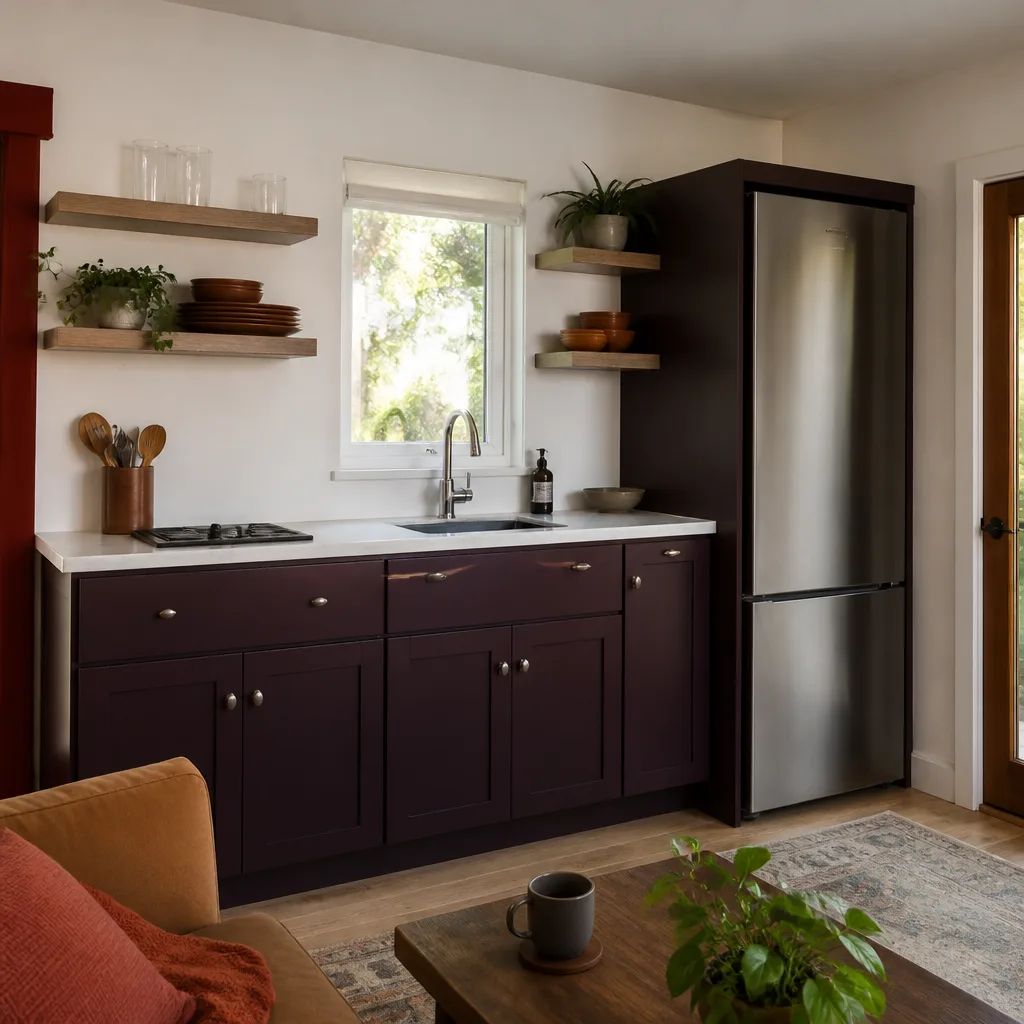
Here in Los Angeles, the installed cost for the most common Tuff Shed-to-ADU part replacements breaks down like this:
- Entry door swap to a fire-rated, egress-compliant unit: $1,400 to $2,800 installed, including the door, frame, hardware, and weather sealing.
- Roof re-flash and seam reseal on a typical 10×12 to 12×16 floor plan: $900 to $2,200 depending on access and how many laps need stripping and re-bedding.
- Floor reinforcement (additional piers or mid-span beam): $1,800 to $4,500, varies widely with crawl access and soil condition on your Los Angeles lot.
- Bottom plate repair and anchor bolt retrofit to meet L.A. seismic code: $2,000 to $5,500, driven mostly by how much wall sheathing has to come off.
- Window replacement to Title 24-compliant dual glazing: $800 to $2,400 per window, labor included.
Every price above is a written quote before we start. No change orders on a Lodgewick ADU Los Angeles job unless you add scope yourself. The work carries our 365-Day Done Right Promise: if any installed part fails within a year of installation, we come back and make it right at no charge. That’s in writing on every project, not just said over the phone.
DIY or Call Us?
Some Tuff Shed parts are genuinely straightforward for a homeowner to check and replace, and we’ll tell you which ones. A sagging door that just needs hinge screws re-torqued into fresh wood is a one-hour fix with a drill and some wood dowels. Resealing a small section of exposed roof lap with a tube of polyurethane sealant on a dry weekend is also reasonable.
What we don’t recommend is any work involving the foundation anchoring, the roof structure, or the wall framing. Those require permits in Los Angeles, and a failed inspection will cost you more time and money than the repair itself. The same goes for anything near the electrical rough-in, which is its own hazard. If you’re unsure which category your problem falls into, call (213) 698-7116 and describe what you’re seeing. We’ll tell you over the phone whether it’s a DIY check or a service call, before anyone gets in a truck.
FAQs
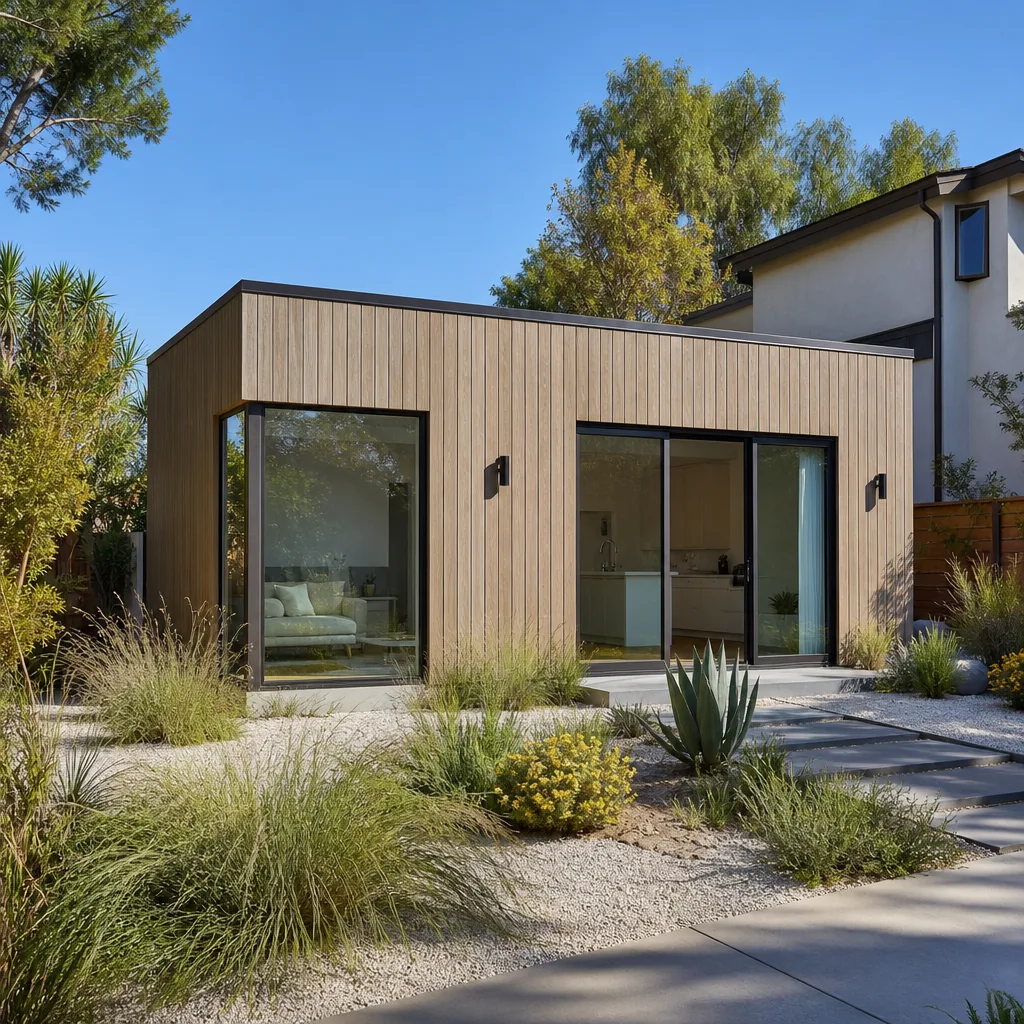
Original Tuff Shed doors, windows, and roof sealing that were built for storage duty typically last 5 to 8 years once the structure is in daily residential use as a new detached ADU, and that lifespan drops to 3 to 5 years for sealant and flashing in Los Angeles sun exposure. Call (213) 698-7116 for a condition assessment and a written quote on anything that needs replacing.
Most Tuff Shed roofs on Los Angeles ADUs can be re-flashed and resealed rather than replaced, as long as the metal panels themselves aren’t rusted through and the purlins remain sound. We inspect the full roof plane before quoting, because a partial fix on a failing roof just moves the leak to a new seam.
A door swap or window replacement is typically a single-day job once the part is on our truck, and a full roof re-flash or floor reinforcement usually takes two to three working days. We schedule a defined arrival window before the crew shows up, and the site is cleaned at the end of each day.
Yes. We keep OEM Tuff Shed door tracks, hinges, and roll-up assembly hardware in stock at our Los Angeles location, along with code-compliant aftermarket doors, windows, anchor bolts, and flashing for the residential-grade upgrades a dwelling unit requires. If we don’t have your exact part on hand, we source it and quote a lead time before you commit to anything.
If your Tuff Shed new detached ADU needs a part matched, priced, and installed without the usual runaround, call (213) 698-7116 and ask for a free estimate. We also work with Abodu, Cover, and Dvele prefab systems if your ADU plans grow beyond the shed shell. Tell me what you need the space to do, and I’ll tell you exactly what it’s going to take, no guessing, no runaround.
Written by Russ Delmar, Owner, Lodgewick ADU Los Angeles at Lodgewick ADU Los Angeles, serving Los Angeles and nearby areas.