James Hardie Junior ADU Conversion: The Los Angeles Owner’s Guide
A junior ADU conversion using James Hardie siding and trim typically costs between $28,000 and $55,000 fully permitted in Los Angeles, depending on whether you’re converting an existing garage, adding a bedroom-and-bath to a detached structure, or building within the 500-square-foot JADU limit. We stock the James Hardie HardiePlank lap siding, HardiePanel vertical siding, and HardieTrim boards needed for these conversions, and we can typically start within two to three weeks of permit approval. Most Los Angeles homeowners discover they need this page because an existing siding section has buckled, pulled away from the framing, or started wicking moisture behind the board, and they want to know whether the Hardie product itself failed or the installation did.
The honest answer, in our experience across Los Angeles neighborhoods from Palms to Highland Park: James Hardie products rarely fail on their own. What fails is the flashing, the joint treatment, or the clearance between the bottom edge of the board and grade. We’ll walk through exactly what to look for below.
Which James Hardie Models This Applies To
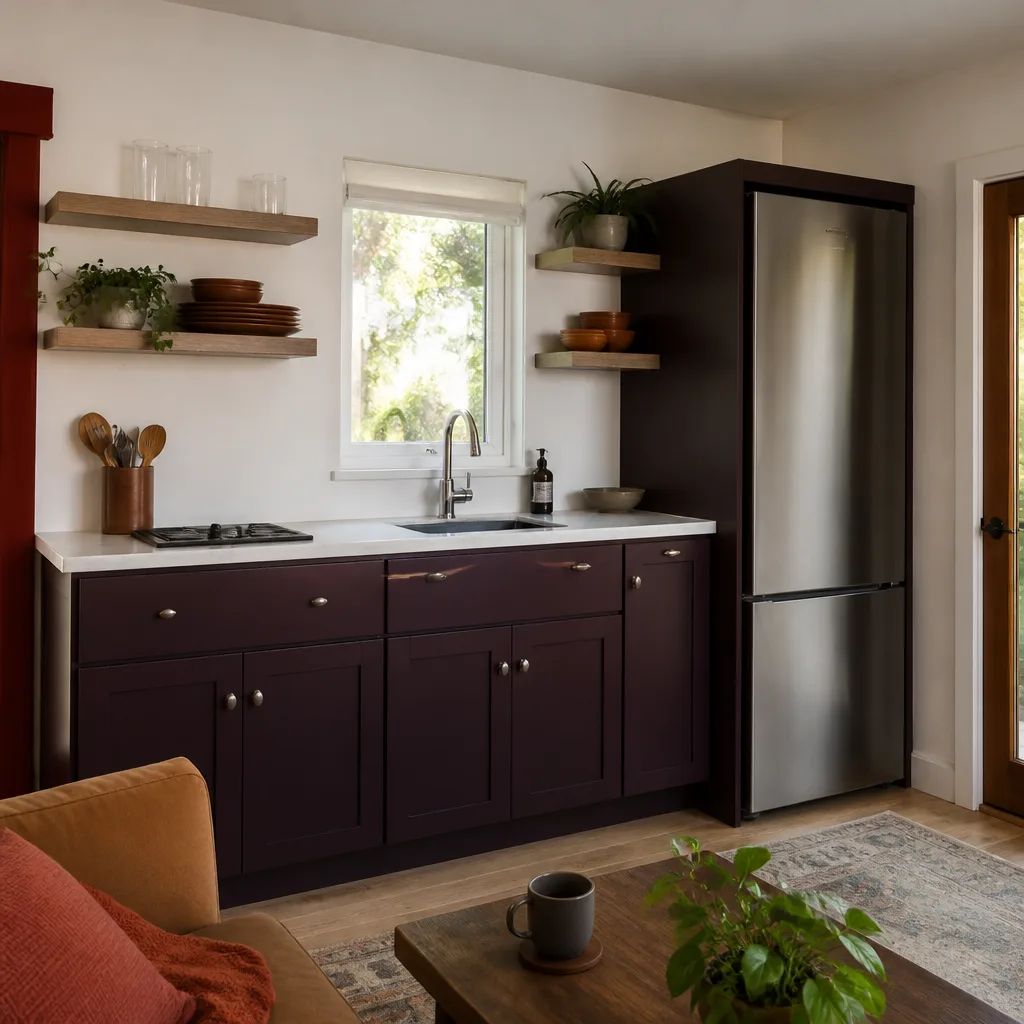
Junior ADU conversions in Los Angeles are defined by California state law: a JADU is a conversion of existing space within or attached to a single-family home, capped at 500 square feet, with its own entrance, a small efficiency kitchen, and either its own bathroom or shared use of the main house bathroom. Los Angeles Department of Building and Safety (LADBS) enforces this under the city’s ADU ordinance, and James Hardie siding is one of the most common exterior finishes we see on garage-to-JADU conversions because it meets the fire-resistance requirements LADBS looks for when a detached garage sits close to a property line.
For the siding itself, the relevant James Hardie product lines are:
- HardiePlank HZ5 lap siding (5/16 in. thick, 8-1/4 in. or 6-1/4 in. exposure) – the most common board we match on JADU conversions
- HardiePanel HZ5 vertical siding (7/16 in. thick, 4×8 or 4×10 sheets) – often used on the upper gable ends or as a design accent
- HardieTrim HZ5 boards (5/4 in. thick, in 3-1/2 in., 4-1/2 in., 5-1/2 in., and 7-1/4 in. widths) – corner boards, fascia, and window trim
Here’s the compatibility gotcha most Los Angeles homeowners don’t know until a board fails: if the original installation used HardiePlank XLD (the older 3/8 in. thick line, discontinued around 2017), you cannot mix it with HZ5 boards of a different thickness. A 5/16 in. HZ5 board will not sit flush against a 3/8 in. XLD board; the lap line will be visibly wrong, and the butt joints won’t seal. We keep a small inventory of XLD-profile boards for repairs, but if the damage is widespread, we recommend re-siding the affected wall with HZ5 rather than chasing a mixed-thickness repair that will always look patchy.
OEM versus aftermarket: for the siding boards themselves, there is no legitimate “aftermarket.” James Hardie holds the patents on the fiber cement formulation, and we install genuine James Hardie product only, purchased through authorized regional distributors. Imitation fiber cement boards from overseas distributors are thinner, chalkier, and fail the LADBS inspection for fire-rated exterior wall cladding. Where aftermarket does make sense is flashing, housewrap, and fasteners, and we use those interchangeably with OEM where the spec sheet allows.
Signs Your James Hardie Junior ADU Conversion Is Failing
Here’s what we actually see on Los Angeles JADU conversions, and what each symptom tells us about the underlying cause:
- Boards pulling away from the studs at the bottom edge. This is almost always a clearance problem, not a board problem. James Hardie’s installation spec calls for a minimum 2 in. clearance between the bottom of the siding and grade, and 6 in. in areas with heavy irrigation. When a JADU conversion was rushed, the siding often gets buried in soil or hardscape, and capillary action wicks moisture up into the board. The board swells, the nails pop, and the wall loses its shear rating.
- Chalky, faded, or peeling paint on a conversion that’s only a few years old. James Hardie products with ColorPlus finish are baked with a factory-applied coat, and they should hold up for 10 to 15 years in Los Angeles sun. If the paint is failing early, chances are the board was field-painted after installation with an acrylic flat that was never rated for fiber cement, or the boards were installed with no drainage plane behind them so moisture is trapped.
- Dark staining or mold at butt joints and around window openings. Hardie boards don’t rot, but the OSB sheathing and framing behind them absolutely do. Staining at a joint means the joint flashing was either missing from the start or was installed as a caulk-only joint. Caulk fails in the sun and thermal cycling Los Angeles gets; flashing doesn’t.
- Cracking at the corners of a JADU that was converted from an unpermitted garage. Fiber cement is dimensionally stable, which is why it’s so common on Los Angeles ADUs. But when the original garage slab wasn’t engineered for finished living space, it shifts seasonally. The Hardie boards crack at fastener points because the framing is moving faster than the board can flex. That’s not a James Hardie warranty issue; it’s a foundation-and-footing problem, and it needs to be addressed before any re-siding.
- Visible nail heads or nail pops on a wall that faces the afternoon sun. The west-facing wall of a Palms or Mar Vista JADU gets hammered by sun every day. If the original installer used roofing nails instead of the specified 3-1/4 in. hot-dipped galvanized siding nails, or over-drove the fasteners, the board loses its hold. We re-fasten with the correct nail pattern and seal the old fastener holes before they become moisture entry points.
Replacement Cost & What’s Included
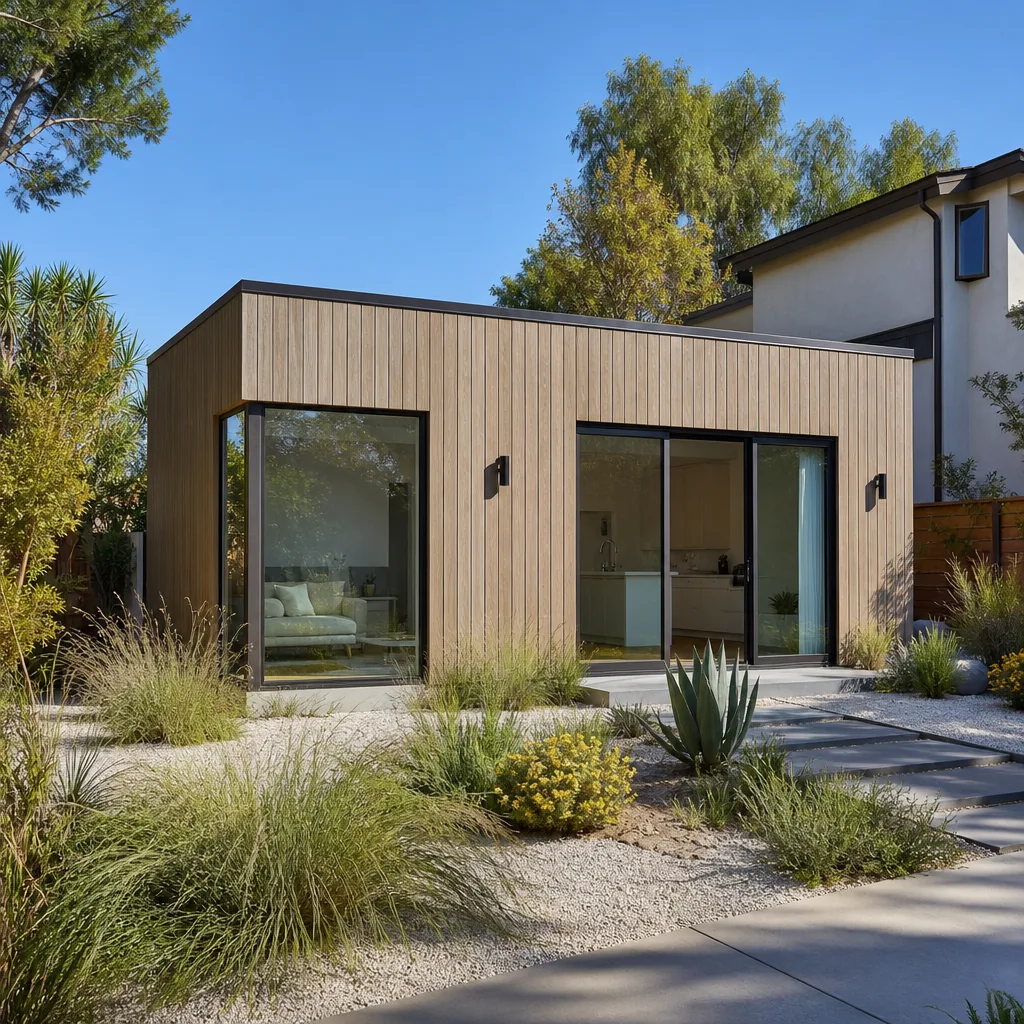
For a James Hardie junior ADU conversion in Los Angeles, here’s what you can expect to pay, installed:
- Partial wall re-siding (one wall, up to 120 sq ft, HardiePlank HZ5 lap, flashing corrected, re-painted): $4,800 to $8,500
- Full garage-to-JADU exterior re-side (HardiePlank lap, HardieTrim corners, window trim, fascia, housewrap, flashing, caulk joints, paint, and LADBS inspection): $22,000 to $38,000 depending on square footage, two-story vs single, and whether the existing framing needs repair
- HardiePanel replacement with new trim and flashing (typical 4×8 sheet runs): $6,500 to $11,000 for a partial wall
These are not estimates; they’re our written price ranges for Los Angeles work based on what we’ve installed over the past several years. If the wall needs re-framing, termite repair, or shear-wall upgrade before new siding goes on, the price goes up, and we’ll tell you that in writing before any work starts. Everything we quote includes the permit, the materials at distributor cost, the labor, the LADBS inspection fee, and a written guarantee covering the installation for a full year. The Kingswell Guarantee applies to every James Hardie JADU conversion we do: written price first, a real arrival window, a clean job site, and a written guarantee delivered before we start.
DIY or Call Us?
What you can safely check yourself, if you’re standing outside your JADU with a flashlight: measure the clearance between the bottom of your Hardie boards and the soil or hardscape. If it’s under 2 inches, that’s the problem, and regrading or cutting the bottom board is a small fix if caught early. Look at the butt joints; if you see caulk pulling away from the board edges, the seal is compromised and water is getting behind the wall.
What we don’t recommend doing yourself: pulling boards off a JADU wall that’s already showing damage. The exterior sheathing of a living-space conversion is also the fire-rated layer that LADBS is going to inspect. If you expose framing without a permit and without replacing the wall assembly in the right order and with the right materials, you’ve just turned a $3,000 flashing repair into a $20,000 re-side, and LADBS will want plan sets before you can put it back. The crews who do this work for us have been re-siding Los Angeles JADUs for years and know what the inspector is going to look for before they come. If you want us to look at it, call (213) 698-7116 and we’ll come out and tell you what you’re actually dealing with, in writing, for free.
FAQs
James Hardie siding carries a 30-year non-prorated, transferable limited warranty on the boards themselves, and in Los Angeles’ dry climate, the board will typically outlast the paint and the flashing around it. The realistic lifespan of the complete system, with maintenance, is 20 to 30 years before the joint flashing, caulk, and fasteners need full replacement.
Sometimes. If the failure is a single cracked board at a fastener point and the framing behind it is sound, we can replace the individual board, re-flash the joints above and below it, and repaint to match. If the damage extends to multiple boards or the sheathing is wet, the honest answer is replacing the section, and we’ll show you photos of what we found before we quote the bigger job. Call (213) 698-7116 and we’ll give you an exact answer, not a guess.
For a partial wall repair, our crew typically finishes in one to two days, plus paint cure time. For a full exterior re-side of a converted garage, plan on five to eight working days, plus the LADBS inspection, which we schedule and handle. We’ll give you a written timeline as part of the quote.
Yes. We keep HardiePlank HZ5 lap boards in the two most common exposures, HardieTrim boards, and flashing material stocked on our trucks for Los Angeles service calls. If you have a discontinued XLD profile, as we mentioned, we carry a limited inventory of those for repair work, and we’ll match what’s on your wall rather than convincing you to re-side when you don’t need to.
Written by Russ Delmar, Owner, Lodgewick ADU Los Angeles at Lodgewick ADU Los Angeles, serving Los Angeles and nearby areas.