James Hardie ADU Design & Permitting: The Los Angeles Owner’s Guide
James Hardie siding and trim on an ADU in Los Angeles typically costs $14 – $26 per square foot installed, and full design-plus-permitting packages for a Hardie-clad accessory dwelling unit run $8,500 – $16,000 depending on setbacks, soils, and whether you’re converting a garage or building from scratch. We stock James Hardie-compatible trim, flashing, and fasteners for existing ADUs, and we handle the L.A. Department of Building and Safety submittal set for new Hardie-sheathed builds. Most owners discover the problem when a failed flashing detail lets water behind the HardiePlank lap siding, or when a corner trim board pulls loose and exposes the weather barrier underneath. By the time you see the stain on the interior drywall, the failure has been working for months.
Los Angeles has its own rhythm for this. The marine layer that rolls through Westchester and Playa del Rey keeps northwest-facing Hardie elevations damp longer than the product warranty literature assumes. In the San Fernando Valley, the dry heat cycles cause expansion and contraction that punishes caulk joints at trim transitions. A properly detailed James Hardie installation in Los Angeles lives or dies by the flashing and the clearance gaps, not by how straight the lap lines look from the curb.
We’re an independent Los Angeles ADU contractor, not a James Hardie dealer or authorized warranty agent. What we bring is fifteen years of installing, repairing, and permitting Hardie-clad ADUs across the city, from Palms to Sunland, and a written price before any work starts.
Which James Hardie Models This Applies To
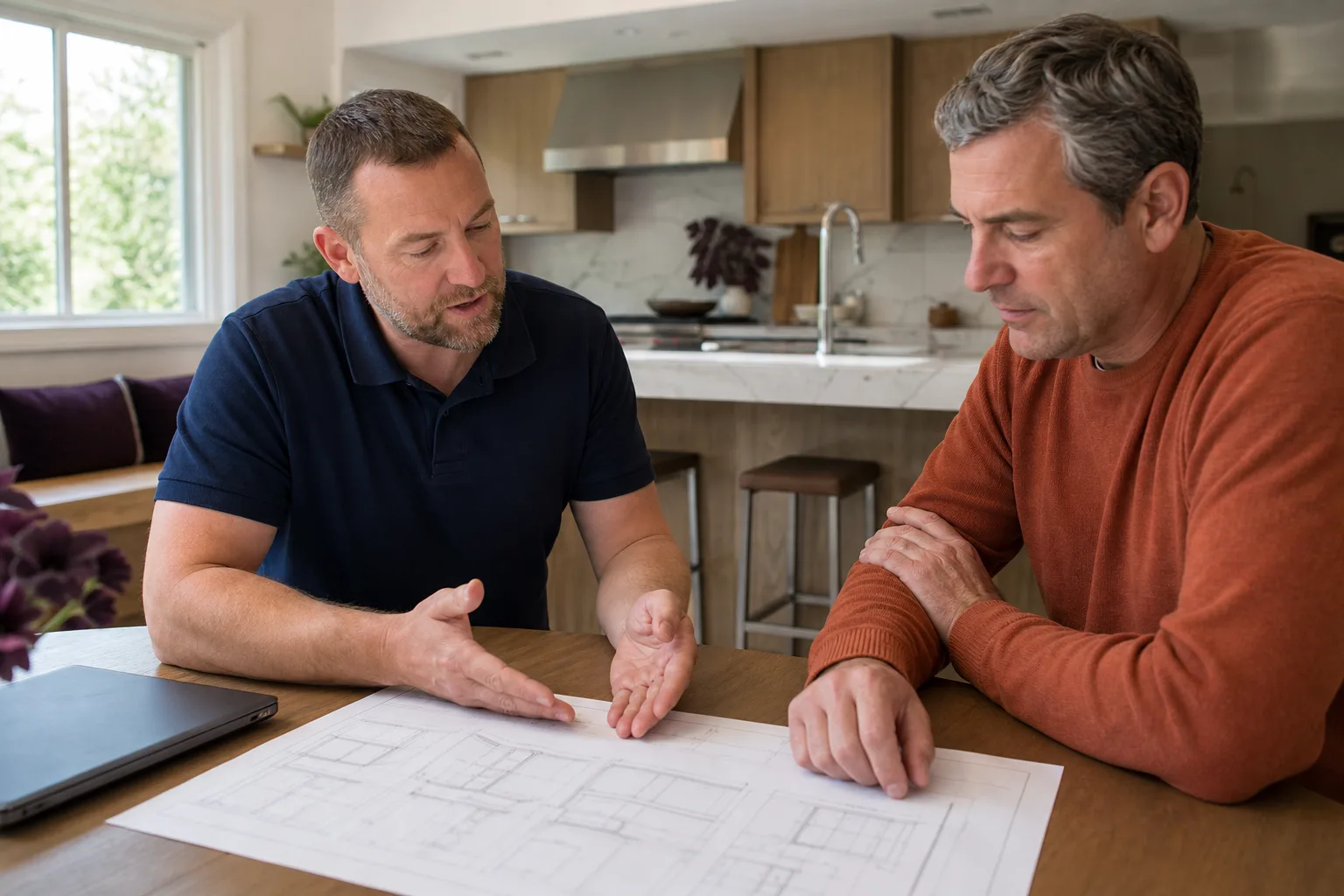
James Hardie makes three siding product families that show up on Los Angeles ADUs: HardiePlank lap siding (the horizontal boards, 5/16″ thick, in 4″ and 7″ exposures), HardiePanel vertical siding (4’×8′ and 4’×10′ sheets used for modern flat-box ADUs), and HardieTrim boards (5/4″ thick, used at corners, windows, and door surrounds). The failure points differ by product. HardiePlank fails at butt joints when the factory edge was caulked instead of flashed. HardiePanel fails at sheet edges when the gap was under-minimum or the flashing tape was skipped. HardieTrim fails when end cuts were left unprimed and wicked moisture from the cut face.
Here’s the compatibility gotcha we see weekly: James Hardie’s published installation guide requires a 6-mil minimum clearance gap between siding and roof lines, deck surfaces, and horizontal trim. In Los Angeles, where garage-conversion ADUs often have slab-on-grade floors and minimal eave overhang, that 6-mil gets violated constantly. Water wicks up the back of the board, the paint blisters at the bottom edge, and the homeowner gets told the siding “went bad.” The siding didn’t fail. The clearance did.
When we replace Hardie boards on an existing Los Angeles ADU, we match the exposure and texture to what’s already on the wall, but we also flag and correct the underlying clearance or flashing deficiency. Otherwise you’re paying for the same repair again in four years. OEM Hardie stock is what we use for full sections that need to match an existing elevation. For isolated damage, we carry the standard Cedarmill texture in 7-1/4″ lap and 4’×8′ Smooth panel on the truck; other textures and colors run through our supplier, usually a one-day turnaround in Los Angeles.
Signs Your James Hardie ADU Design & Permitting Is Failing
- Bottom-edge paint blistering or peeling within 18 months of installation. This is almost always a clearance violation, not a paint failure. Water sits against the bottom edge, wicks upward, and the factory primer loses the fight.
- Caulk cracking at vertical butt joints and trim intersections. Hardie boards expand and contract with Los Angeles temperature swings. If the installer caulked the butt joints instead of using a spline or flashing, the joint opens and closes like a hinge until the caulk tears.
- Staining or soft drywall inside the ADU, typically near window corners or the bottom of a wall. By the time interior damage shows, the exterior flashing has been failing quietly for a season or more. The repair is no longer a siding job; it’s a water-intrusion repair that includes framing inspection.
- Loosened or visibly sagging trim boards at corners. HardieTrim is dense fiber cement. When it pulls away from the corner framing, the nails were undersized or the framing behind the trim was never checked for solid bearing. The board may not be the real problem.
- Visible gap between siding courses and the roofline or deck surface. If you can slide a putty knife between the bottom of the siding and a horizontal surface, the gap is too big and water is getting where it shouldn’t. This one’s common on Los Angeles garage conversions, where slab pours settled after the original garage was built.
Replacement Cost & What’s Included
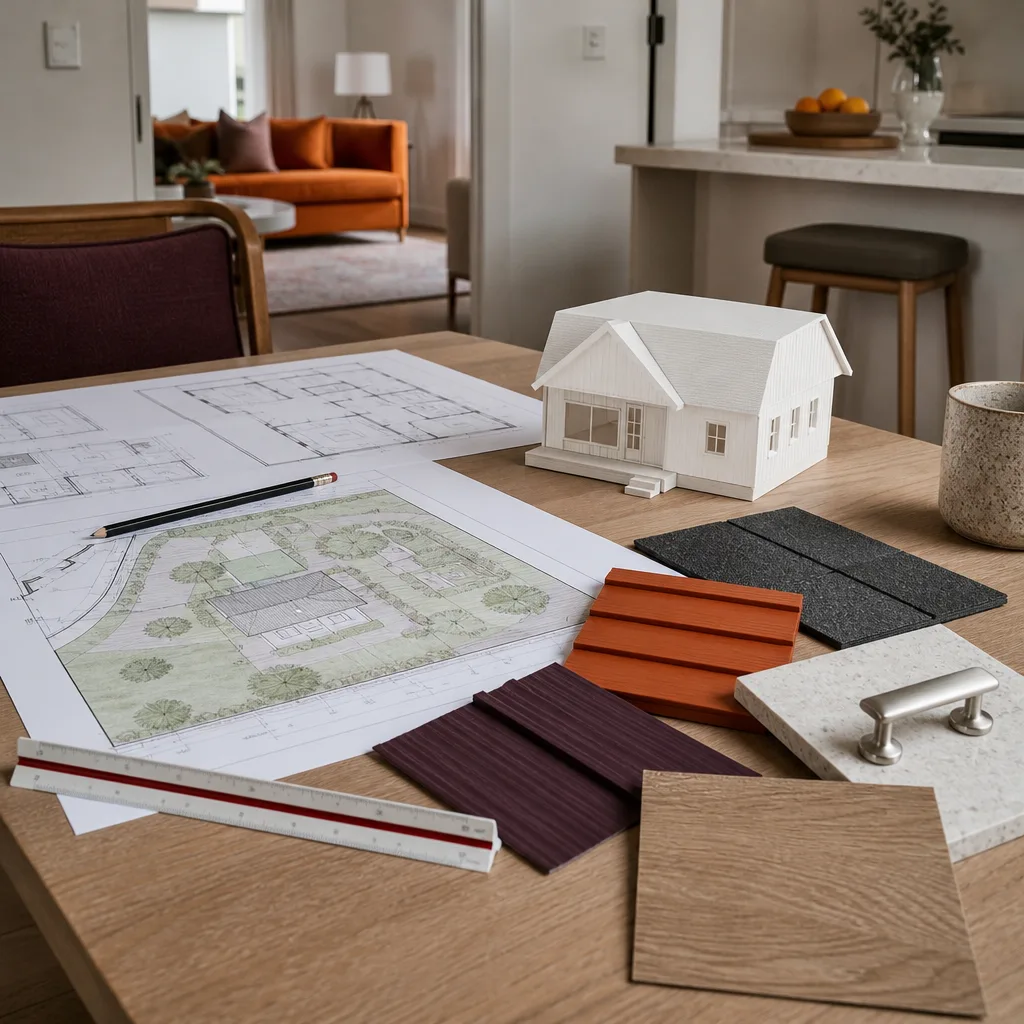
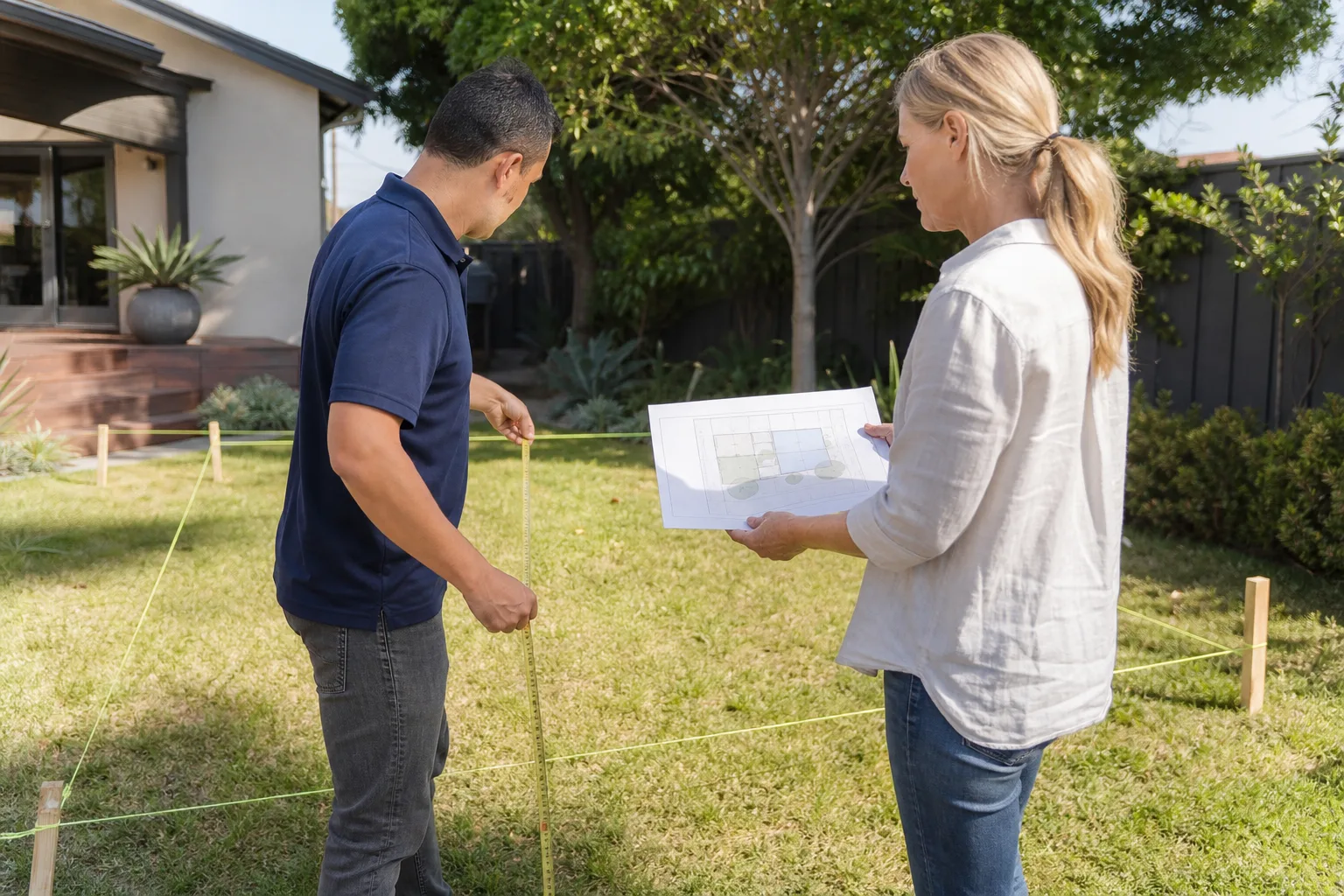
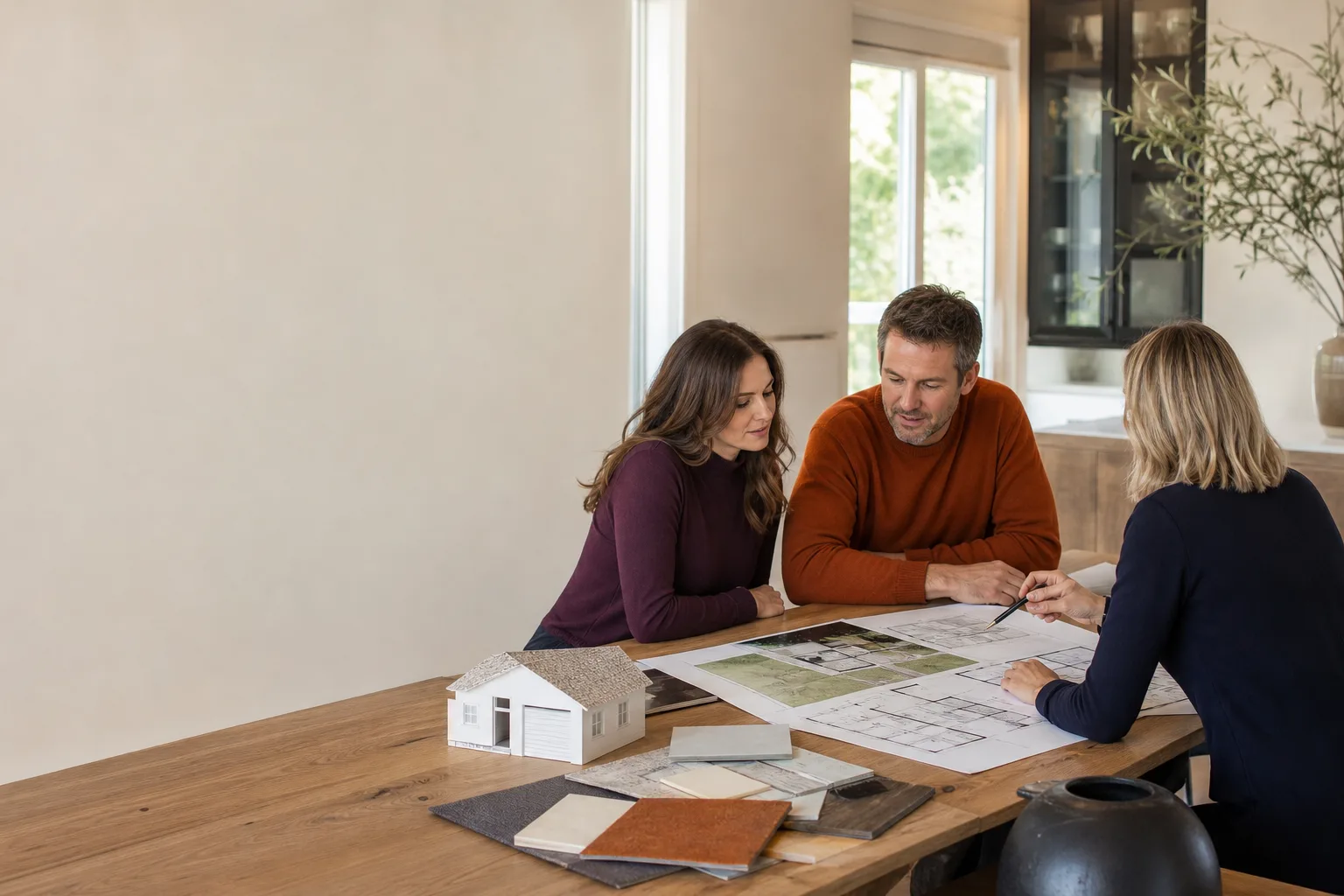
For James Hardie siding repair on an ADU in Los Angeles, expect $14 – $26 per square foot for section replacement including demolition, weather barrier repair, new Hardie stock, flashing, fasteners, and paint on the repaired area. A typical corner-trim failure repair runs $900 – $2,400. A full re-side of a 400-square-foot ADU wall runs $5,600 – $10,400. A complete design-and-permitting package for a new Hardie-clad ADU, including site plan, elevations, Title 24 energy calcs, structural drawings, and LADBS submittal handling, runs $8,500 – $16,000. The spread depends on whether we’re converting an existing garage (usually the cheaper path, since the foundation and framing are partly done) or building on a new slab with upgraded seismic design, which most Los Angeles hillside lots require.
Every one of those numbers is a written line-item price before we start. That’s the Kingswell Guarantee: the price we hand you is the price you pay, and if the repair fails within 365 days, we come back and make it right at no charge. Russ Delmar built this company so that a Los Angeles homeowner never has to say, “The guy said it’d be one price and then it wasn’t.”
The estimate itself is free. Call (213) 698-7116 and we’ll come out, look at the elevation, measure the exposure, and tell you what it costs.
DIY or Call Us?
There are things you can safely check on your own. Look at the bottom course of siding where it meets the concrete walkway or roof surface. Use a tape measure and check whether you have at least a quarter-inch gap. Look at the butt joints between siding boards and see whether they’re caulked, flashed, or simply gapped. Note any paint blistering and where it sits on the wall.
What you should not do is pull a Hardie board off the wall. The board isn’t under dangerous tension like a garage door spring, and Hardie itself won’t shock you, but the demolition exposes whatever the last installer did wrong behind it. Bad flashing repair is the number one reason a $600 siding patch becomes a $4,000 water damage claim in Los Angeles. The work isn’t about the board; it’s about the lap order, the shingling direction, and the weather barrier continuity behind everything. Russ’s rule from his days at Los Angeles Trade-Technical College: water runs downhill, but only if you give it a path. Most DIY attempts give it a new path through the wall.
If you’re standing in front of a blistered-bottom HardiePlank wall and you want to know whether it’s a $900 trim repair or a full re-side, call (213) 698-7116. The diagnosis costs you nothing.
FAQs
James Hardie’s product warranty runs 30 years non-prorated on the siding itself, but the installed system on an ADU in Los Angeles realistically needs paint and caulk maintenance every 8 – 12 years, and the flashing details at penetrations and transitions typically need correction or replacement within 10 – 15 years even if the boards themselves are still solid. The board may last 30 years; the installation around it rarely does without maintenance.
Yes, isolated boards and trim sections can be replaced individually if the underlying water barrier is intact and the neighboring boards are sound. The call we make site-by-site: single-board replacement with a re-flashed joint costs less than a full re-side, but only makes sense if the surrounding boards aren’t already showing early failure. We won’t sell you a patch on a wall that needs to come down. The written estimate tells you which one you’re looking at.
Design and permit submittal for a standard Hardie-clad ADU in Los Angeles takes 6 – 10 weeks with a complete set of drawings and a responsive homeowner. LADBS review times vary by office and current backlog, but a clean submittal with accurate site plans and Title 24 calcs avoids the three-month correction ping-pong that happens when drawings go in half-finished.
We stock standard Cedarmill lap siding in 7-1/4″ exposure and Smooth HardiePanel sheet stock on our trucks for same-week repair work. Specialty colors and textures, including the ColorPlus factory-finished line, come through our Los Angeles supplier on a one-day turnaround. For new ADU construction, we order full project quantities from the supplier on the schedule set by the permit approval.
Written by Russ Delmar, Owner, Lodgewick ADU Los Angeles at Lodgewick ADU Los Angeles, serving Los Angeles and nearby areas.