Tuff Shed Site Prep & Utilities: The Los Angeles Owner’s Guide
Site prep and utility rough-in for a Tuff Shed in Los Angeles typically runs $3,800 to $9,500 installed, depending on slab versus pier foundation, grading, and how far we’re trenching electrical from your main panel. We stock the common Tuff Shed-compatible materials on our trucks and can usually start site work within a week of your written estimate. Most owners don’t discover a site prep problem until the shed has been sitting there for a couple of rainy seasons, and suddenly the door doesn’t close square anymore, or water pools at the low corner every time it drizzles. That’s when the phone rings.
We’re an independent Los Angeles contractor, not affiliated with Tuff Shed corporate. That matters because we’re not selling you a shed kit, we’re fixing what’s under it and what feeds it power. Russ Delmar and our crew have set and leveled dozens of Tuff Shed foundations across Los Angeles, from Eagle Rock down to Palms, and we know where these installs tend to go wrong on local soil.
Which Tuff Shed Models This Applies To
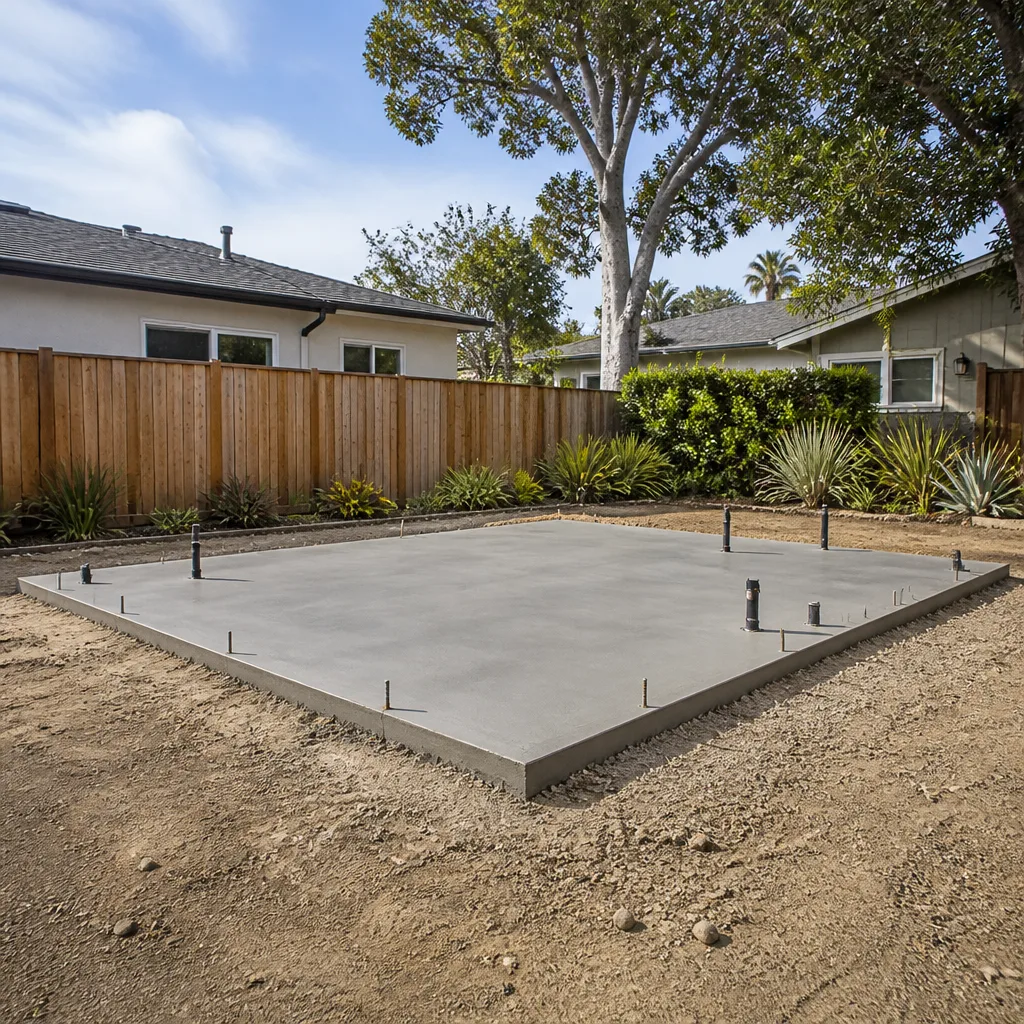
Site prep and utilities apply to every Tuff Shed line we see in Los Angeles backyards, but the specifics change by model. The Premier PRO series and Premier Tall Barn need a level, load-bearing pad and often a concrete slab because of their size and the weight of floor systems. The Sundance series and smaller Ranch sheds can sit on a compacted gravel pad with pressure-treated runners, which saves real money, but only if the grade is already workable.
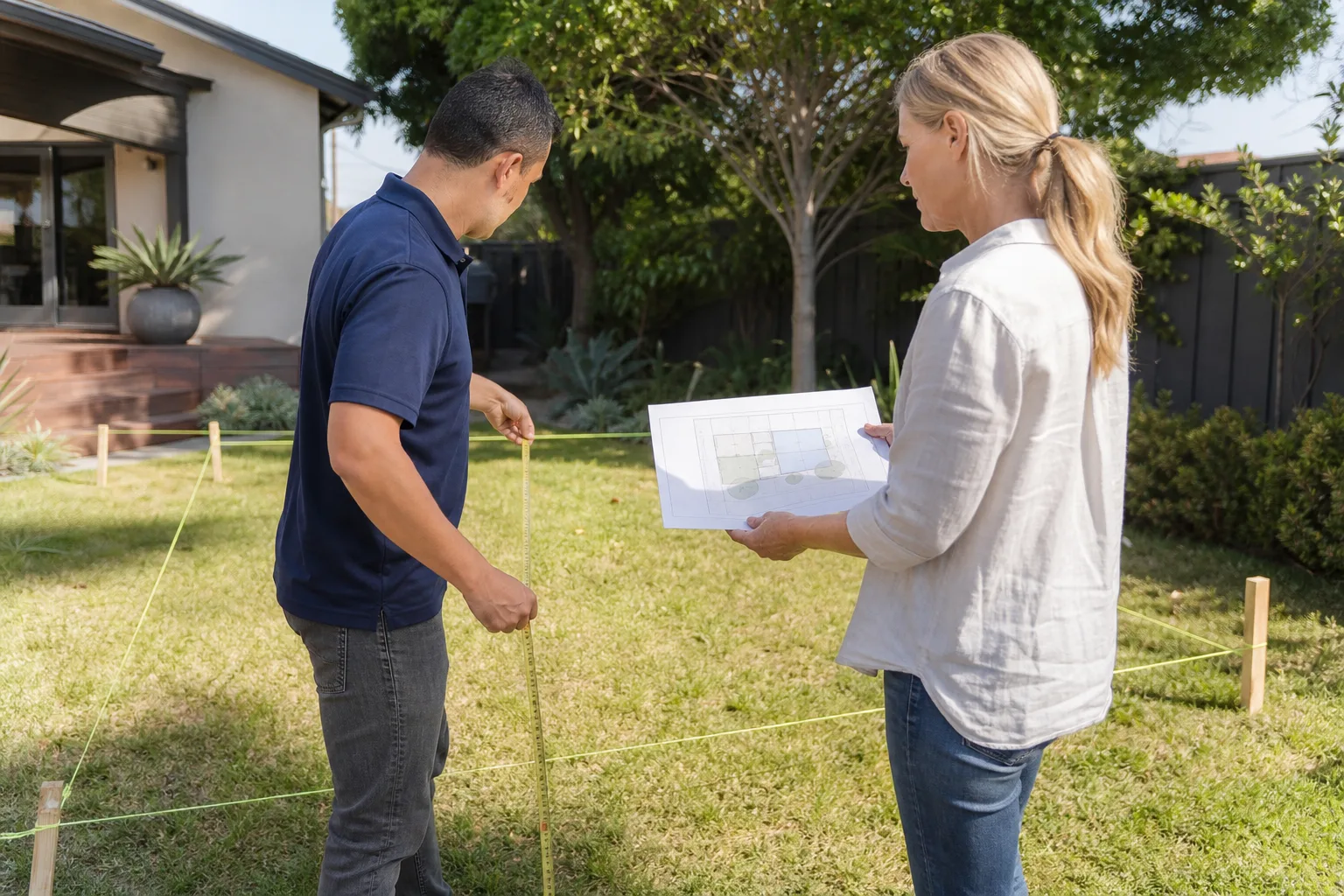
Here’s the compatibility gotcha most owners miss: Tuff Shed anchors their floor frames to the foundation with specific bolt-down or tie-down hardware, and that hardware changes based on whether you ordered the shed as a RP (floor installed on your pad) or standard kit. If the original installer skipped anchors or used the wrong spacing, the shed walks a quarter inch a year, and the door frame binds. We don’t order that hardware blind. We measure the floor joist spacing on-site before we quote. For electrical, Tuff Shed buildings are pre-framed for one or two interior outlets, a switch, and an exterior light, but the model year of the shed determines whether the wiring channels are stapled loose or routed through clips. Older Premier sheds from before 2018 have a different channel layout, and we carry both clip styles to avoid a sloppy retrofit.
On the OEM versus aftermarket question: for anchor hardware and pier blocks, we use what the site and the existing shed frame actually call for. Sometimes that’s the Tuff Shed-branded tie-down kit, sometimes it’s a stronger aftermarket Simpson Strong-Tie equivalent. We’ll tell you which one we’re using and why, and the price reflects exactly that part, not a generic “foundation kit” line item.
Signs Your Tuff Shed Site Prep & Utilities Is Failing
- The door was fine in July and now it rubs the frame every time you close it. Los Angeles soil, especially the clay-heavy stuff in the San Fernando Valley and parts of West L.A., expands when winter rain finally shows up and contracts during dry summers. A pad that wasn’t compacted or a pier that wasn’t set below the movement zone lets one corner rise or sink just enough to throw the shed out of square.
- Water pools along one wall after any real rain. That’s a grading problem, not a shed problem. The pad or the surrounding soil pitches toward the building instead of away. Left alone, you get rot in the floor joists and rust on the anchor bolts within two or three wet seasons.
- A corner of the shed feels spongy or bounces when you step inside. Floor joists are spanning too far for the footing or one pier has settled. Tuff Shed floor systems are designed for the loads they list, but none of that matters if the support below isn’t doing its job.
- The interior outlet trips the breaker every time you use more than a drill charger. Most Tuff Shed electrical is set up for light use, one 15-amp circuit with a couple of outlets. If you’re running a small window AC, a freezer, or workshop tools, you need a dedicated feeder line sized for that load, and the existing rough-in might not have the capacity.
- You see daylight or a gap under the floor frame at the low end. Erosion happens quietly. Every downspout that dumps near the shed edge washes a little more soil away. Within a few years, part of the floor is bridging air. That puts stress on the walls and the roof. Nobody notices until a wall bow shows up.
Replacement Cost & What’s Included
Here’s what we quote in Los Angeles, and it’s a written number before we touch anything:
- Compacted gravel pad with drainage correction (small to mid-size sheds): $1,400 to $2,800
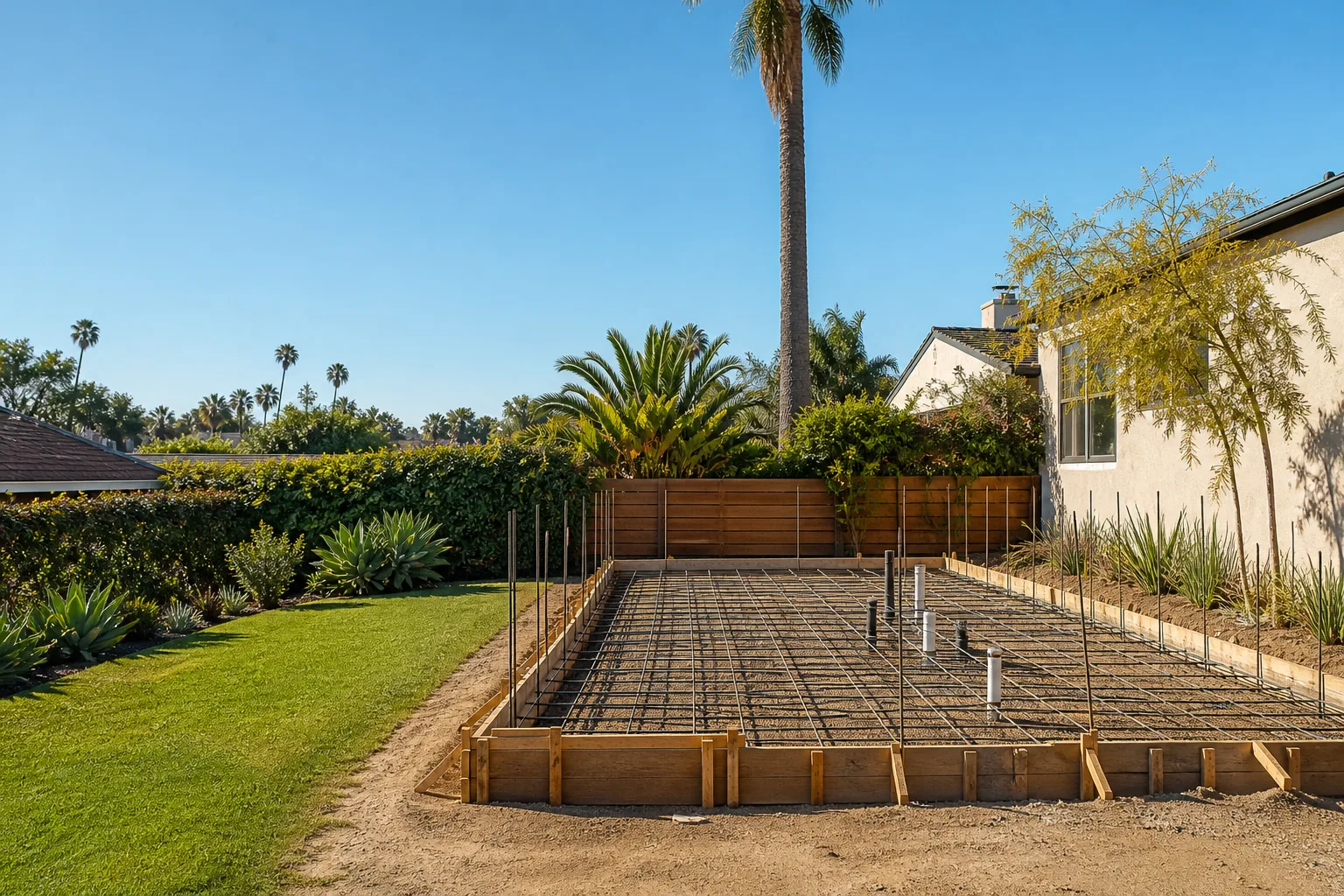
- Concrete slab foundation with steel reinforcement and anchor bolts: $3,200 to $5,500 (poured and finished)
- Pier and beam support with helical or concrete piers: $2,800 to $6,000, depending on pier depth and soil conditions
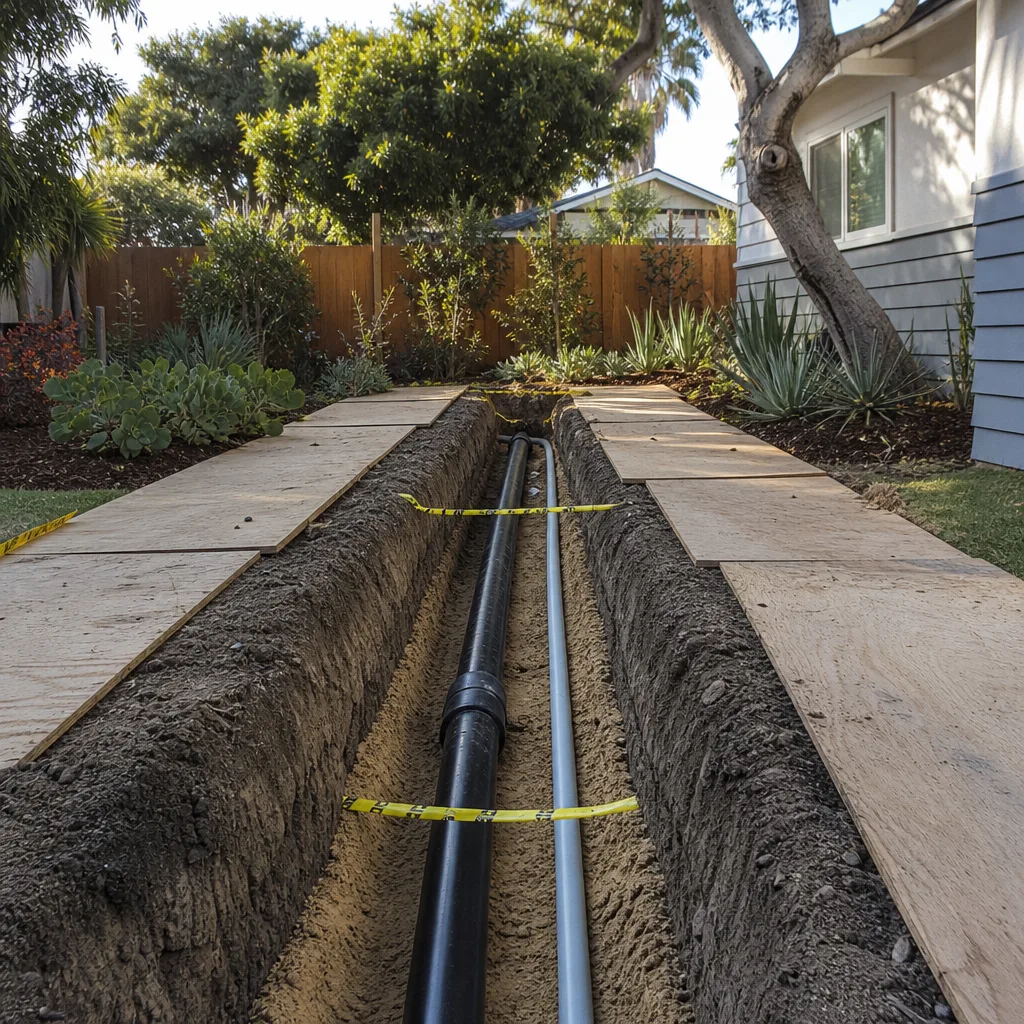
- Electrical trenching and subpanel run from main panel to shed: $1,800 to $3,500, plus materials, depending on distance and whether we’re going through concrete or open ground
- Full site prep plus electrical rough-in, done as one project: $5,500 to $9,500 for a typical Los Angeles backyard
What drives the range is the dirt itself. Los Angeles has everything from sandy coastal soil in Playa del Rey to rock-hard decomposed granite in the hills, and trenching through the latter changes the labor number meaningfully. When we give you the written price, it includes the parts, the labor, the equipment, and the permit coordination where the city of Los Angeles requires it. There’s no change order at the door. The work carries our 365-Day Done Right Promise: if something in the prep or the utility rough-in fails within a year, we come back and fix it, on paper, no phone tag games.
DIY or Call Us?
There are a few things an owner can safely check before calling anyone. Look for roof runoff dumping next to the shed. Look for standing water after a storm. Check whether the shed sits level with a four-foot bubble level on the floor. You can even pull the outlet cover off and see if the wire is 12-gauge or 14-gauge, which tells you what that circuit can actually carry. That’s information worth having when you call.
What you shouldn’t do is start guessing at electrical work or try to lift and re-level a loaded shed yourself. We’ve seen sheds that were built and then filled with hundreds of pounds of tools and equipment, and lifting a corner of that mess with a bottle jack and hope is how floors crack and walls rack. Live feeder wiring, trenching near gas and sewer lines, and concrete work with code inspections, those are all jobs for someone who carries the license and pulls the permit. Russ Delmar went through Los Angeles Trade-Technical College’s building technology program, and the thing the instructors hammered into him was that a permit pulled correctly the first time saves a homeowner three months of grief. We still run jobs that way.
If the floor feels soft, the door won’t close square, or the outlet keeps tripping, call (213) 698-7116. We’ll tell you over the phone whether it sounds like a reset or a rebuild, and the estimate is free.
FAQs
A properly compacted base or concrete slab in Los Angeles should last the life of the shed, meaning 20-plus years, but uncompacted or poorly graded pads can show movement within two or three wet seasons. Call (213) 698-7116 and we’ll look at the grade, the drainage, and the existing pad and tell you exactly what’s moving and why.
Many problems can be fixed in place, especially drainage correction, pier shimming, and re-anchoring, but if the base has settled unevenly to the point where the floor is racked, partial or full redo is cheaper long-term than patching. We’ll show you the measurements that led to our recommendation, and you get the written price before you decide.
A gravel pad with drainage correction is usually one to two days. A concrete slab is three to five days including cure time before the shed sits again. Electrical trenching and panel work is typically one to three days depending on distance and whether Los Angeles DWP coordination is needed. We give you a defined arrival window before we start, and the job leaves the yard cleaner than we found it.
We carry the common anchor hardware, pier blocks, conduit, wiring clips, and panel components for Tuff Shed-compatible work on our trucks, so most jobs don’t require a second trip for parts. We also work with the material lines from Abodu, Cover, and Dvele when the job is an ADU conversion rather than a shed retrofit. If your shed needs a specific Tuff Shed anchor kit we don’t have that morning, we tell you at the estimate, not on install day.
Written by Russ Delmar, Owner, Lodgewick ADU Los Angeles at Lodgewick ADU Los Angeles, serving Los Angeles and nearby areas.
Tell me what you need the space to do, and I’ll tell you exactly what it’s going to take, no guessing, no runaround. Call (213) 698-7116 for a free, written site prep and utilities estimate in Los Angeles.