Cover Site Prep & Utilities: The Los Angeles Owner’s Guide
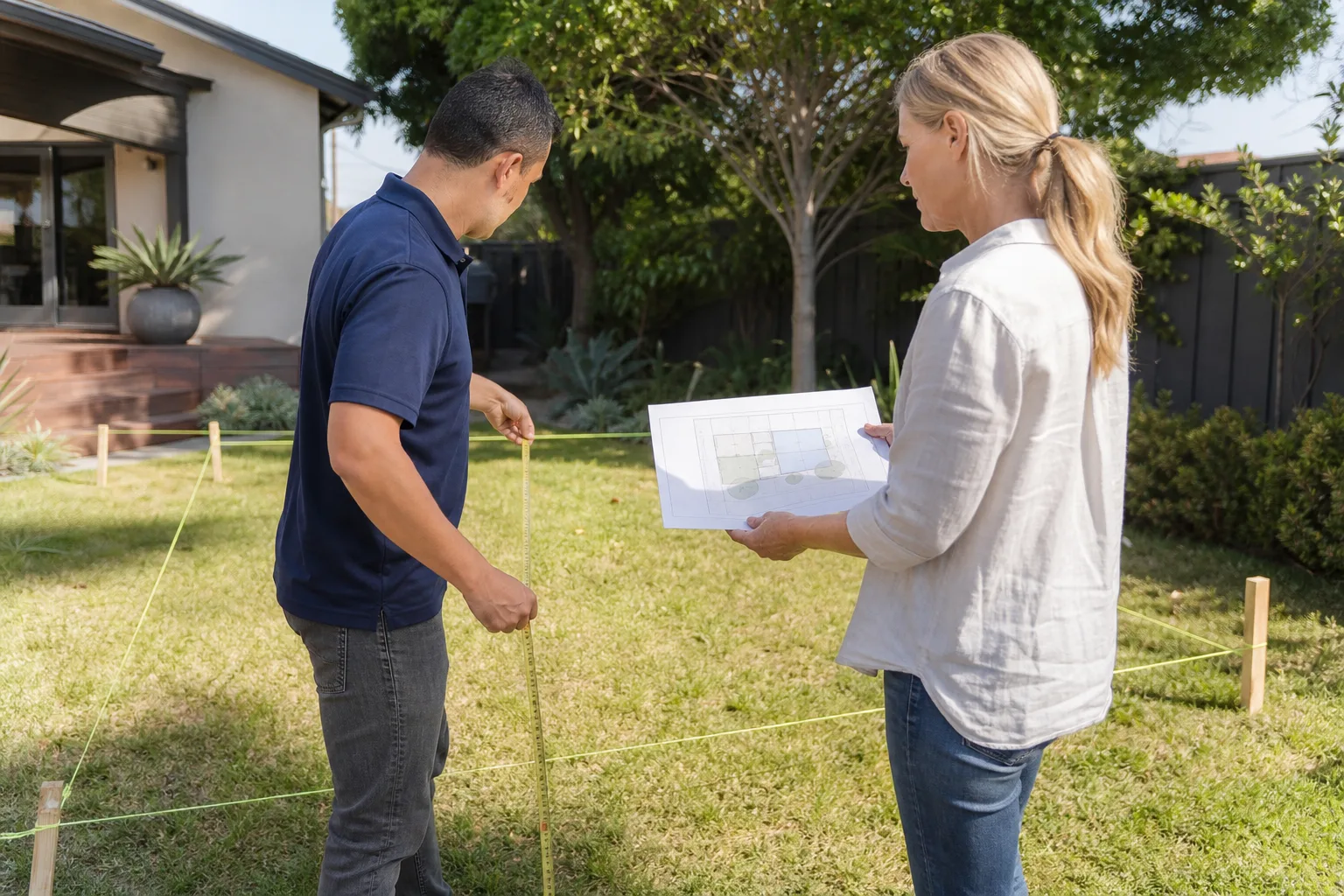
Site prep and utilities for a Cover prefab ADU in Los Angeles typically runs $18,000 to $45,000 installed, depending on your lot’s slope, soil condition, and how far we have to run sewer, water, and electrical lines. Most L.A. homeowners discover this isn’t a “part” so much as a system, and it usually surfaces when the ground settles, a trench line gets hit, or the original prep work was skipped by a previous contractor. If you’re reading this, you probably already have a Cover unit on your property and something under or around it isn’t working the way it should. We stock the common components, know the Cover foundation and utility specs cold, and can have an assessment done fast. Call (213) 698-7116 and we’ll tell you what’s actually wrong before we quote a nickel.
Which Cover Models This Applies To
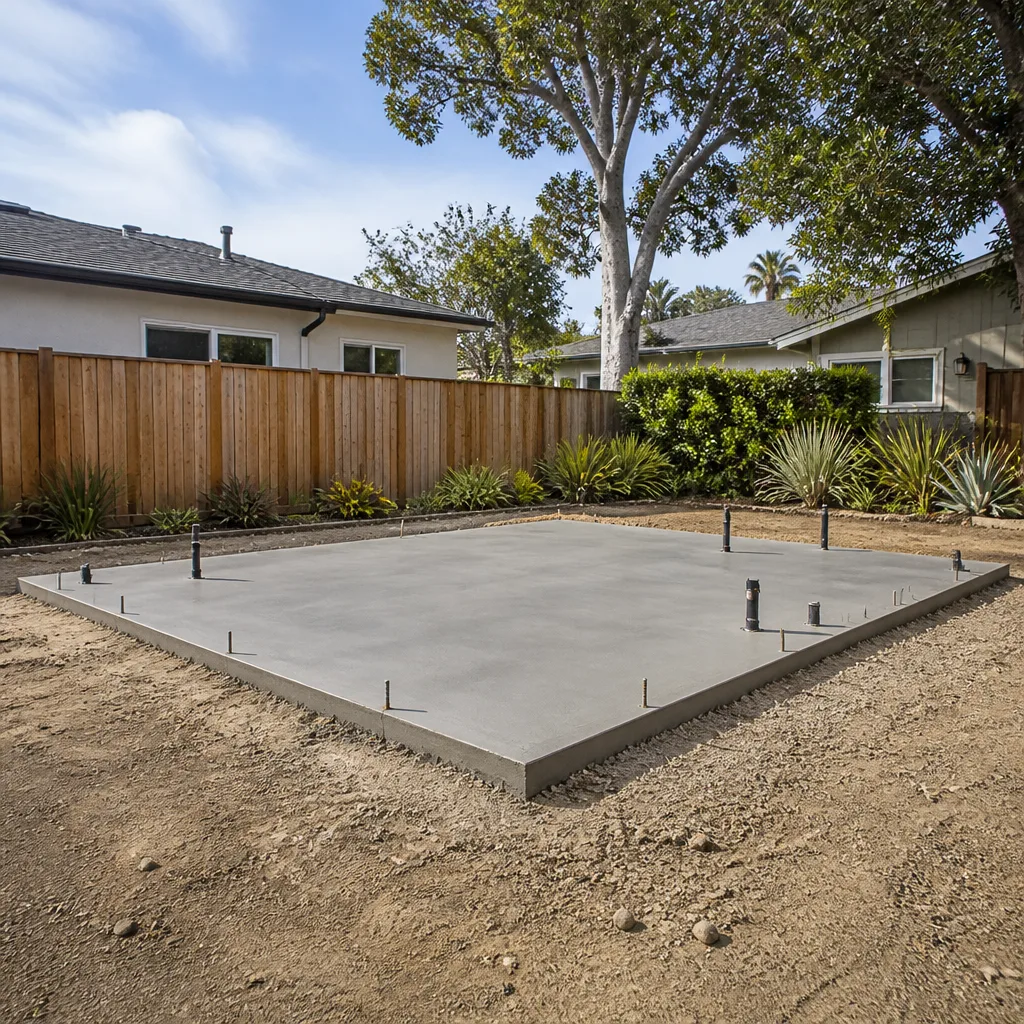
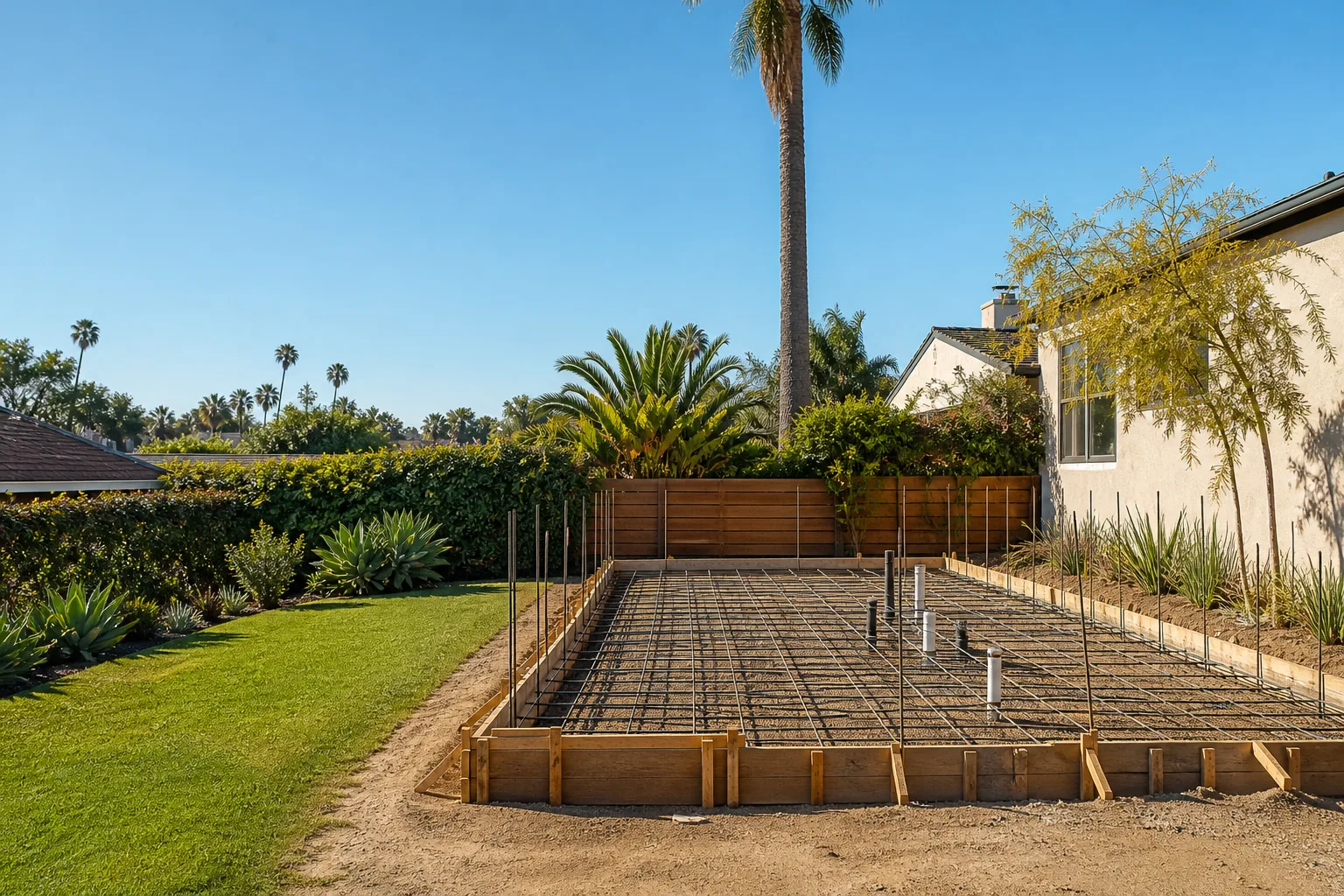
Cover builds panelized single-story ADUs, and every one of them sits on a foundation system that has to be dead level and properly anchored. The model names you’ll see are the Cover Studio, Cover One Bedroom, and Cover Two Bedroom. All three share the same site-prep DNA: a compacted gravel or concrete pad, a 200-amp (or sometimes 100-amp) electrical service, standard 4-inch sewer and 1-inch water supply stubs, and a utility trench that connects everything to the main house or the street. The compatibility gotcha most homeowners don’t know: Cover’s engineering package specifies exact stub locations relative to the pad corners, and if the trench crew is off by more than 6 inches, the unit won’t connect without a fix. We’ve corrected several of these in Los Angeles where the original installer eyeballed it and walked away.
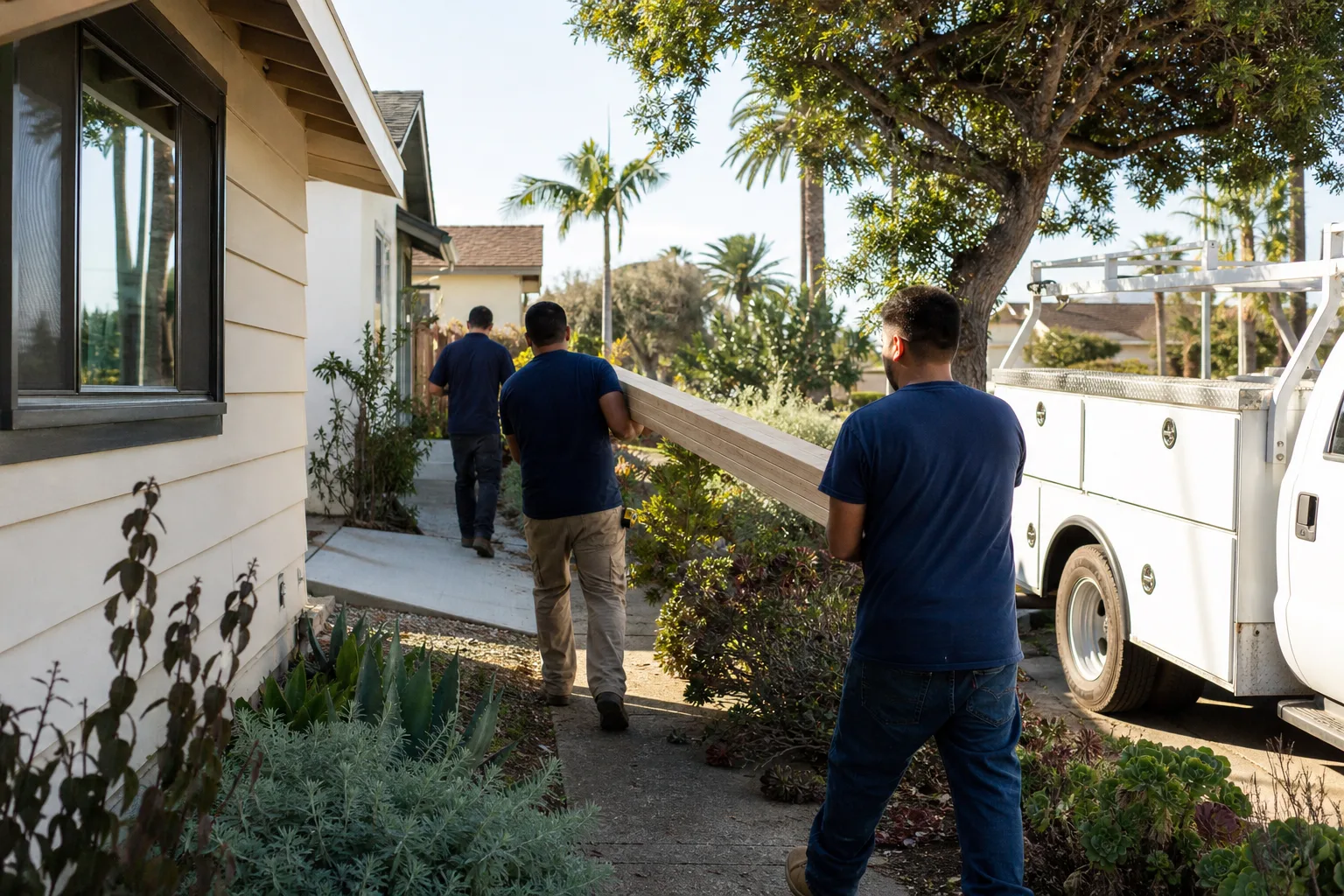
OEM versus aftermarket doesn’t really apply to pipe and conduit the way it does to, say, a water heater. What matters is material spec: Schedule 40 PVC for sewer, Type L copper or PEX for supply lines, and THHN copper in PVC conduit for electrical. We stock all of it on our trucks, plus the trench boxes, compaction plates, and grading lasers to set a pad that stays put. Lodgewick ADU Los Angeles is an independent service provider, not affiliated with Cover, but we’ve worked on enough of their units across L.A. to know their drawings better than most.
Signs Your Cover Site Prep & Utilities Is Failing
- Doors inside the Cover unit stick or won’t latch. This usually means the pad has settled or was never compacted properly. In Los Angeles, the clay-heavy soil in neighborhoods like Baldwin Hills and parts of the Valley expands and contracts with the rainy season, and a thin gravel pad will move with it.
- Slow drains or gurgling toilets in the ADU. Almost always a sewer line that wasn’t bedded correctly or has bellied in the trench. We’ve pulled cameras through lines in Silver Lake where the pipe looked fine on the surface but had a 3-inch dip holding water and waste.
- Breakers in the main panel trip when the ADU’s AC or dryer runs. That signals the feeder line from the house to the Cover unit is undersized or the connections at the junction box are loose. Loose connections arc, and arcing is how electrical fires start.
- Water pressure drops inside the ADU when the main house runs a fixture. The supply line to the unit is too small for the distance, or there’s a kink or partial valve closure somewhere in the run. We see this on long lots in places like Tarzana and Encino where the ADU sits 80 feet or more from the meter.
- Puddles or soft spots form near the pad after rain. This is a grading and drainage problem, not a soaking problem. The pad should slope away a minimum of 2 percent. If water pools against the unit’s perimeter, the steel foundation anchors start rusting and the floor framing wicks moisture.
Replacement Cost & What’s Included
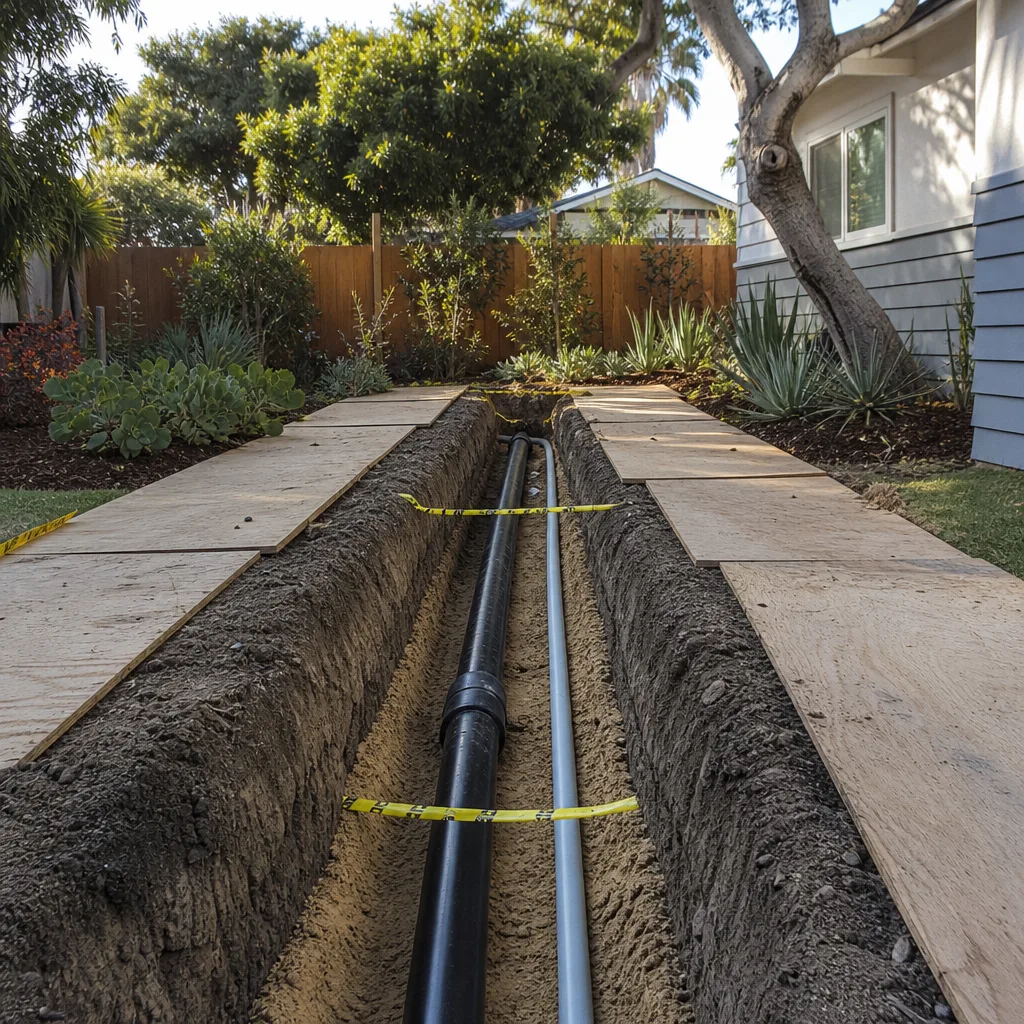
Here’s what you should expect to pay in Los Angeles for the most common Cover prep and utility fixes:
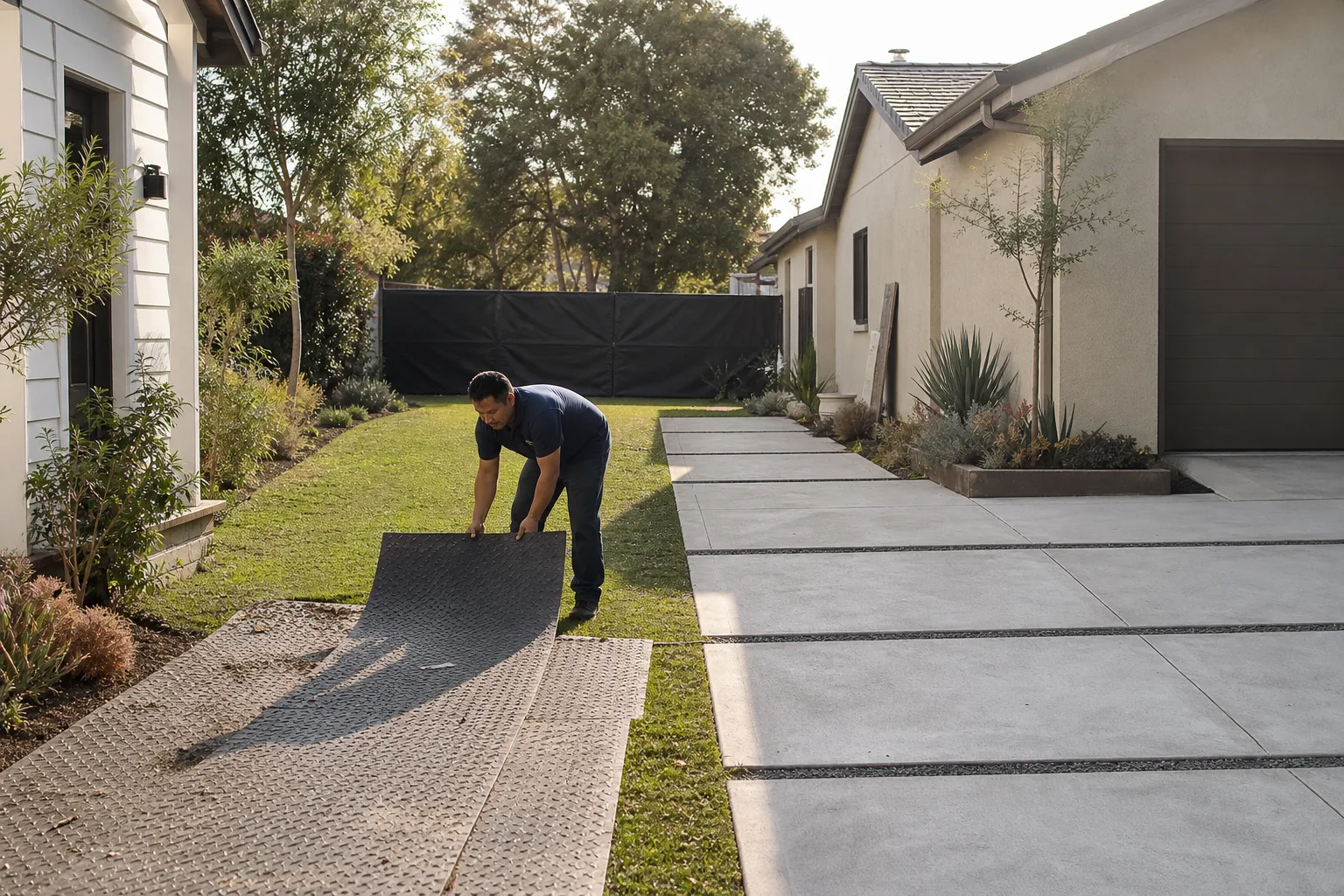
- Full site prep from raw dirt (new unit): $18,000 to $45,000, including demolition if needed, pad construction, trenching, utility runs, and backfill with compaction.
- Pad relevel and re-anchor (existing unit): $9,000 to $18,000, depending on how much concrete has to come out and whether the unit has to be temporarily lifted.
- Sewer line replacement from ADU to main line: $4,500 to $11,000, driven by trench depth (L.A. requires 12 to 18 inches of cover over waste lines) and how much concrete or landscaping sits above.
- Electrical feeder upgrade to 200 amps: $3,500 to $8,000, including new conductors, conduit, and a load calculation if you’re adding AC or a level 2 EV charger.
- Water supply line replacement: $1,800 to $4,200, assuming we can trench straight from the meter or house stub without hitting roots the size of your forearm.
Every quote we write is a fixed number, not an estimate that swells after we dig. That’s The Kingswell Guarantee: written price before work starts, a defined arrival window, a clean job site, and a written guarantee on the repair. If something fails within 365 days, we come back free. If your lot has surprises, like abandoned septic lines or rock we didn’t know about, we tell you the cost of the change before we touch it. No one in Los Angeles should pay a contractor to discover their own property.
DIY or Call Us?
Here’s the honest split. You can absolutely check a few things yourself: look for water pooling near the pad, run the ADU’s outdoor faucet and watch the pressure, flip the breaker for the unit off and on and see if it trips immediately. Those observations will save you time when you call. What you should not do is open a trench, excavate around foundation anchors, or pull the cover off a live electrical panel. A trench collapse in L.A. soil can bury a person in about three seconds, and a service panel with loose lugs can kill you before the breaker reacts. If the problem is under the pad or inside the panel, call (213) 698-7116. Russ Delmar grew up a few blocks from the old Helms Bakery building in Palms, and he’s been running ADU site work in this city long enough to know that the difference between a $4,000 repair and a $28,000 redo is sometimes just a week of ignored settlement. We’ll tell you which one you’re looking at.
FAQs
A properly compacted pad with correct drainage should last 30 years or more without significant movement. The utility runs should last the life of the house. What shortens that in Los Angeles is rain-season soil expansion, tree roots, and pad work that was rushed. If the pad was installed with less than 95 percent compaction, you’ll see movement within the first five years. Call (213) 698-7116 and we’ll tell you what your pad is actually built on.
Yes, in most cases. Drainage and trench-line issues never require moving the unit. Foundation settlement under the middle of the pad sometimes does. If the anchors are still sound and only the edges have settled, we can often inject and relevel without a full lift. We’ll only recommend moving the unit if the pad has cracked through the middle and the frame is flexing.
Most sewer, water, or electrical replacements on an existing Cover ADU take two to four working days. A full relevel can take five to seven days because the soil has to dry, new material has to be placed in lifts, and compaction has to be tested. We give you a written timeline before we start, not a vague “should be quick.”
We do. We carry common plumbing, electrical, and foundation components for Cover, Abodu, and Dvele units because the overlap in utility sizing is close enough that most of what’s on our trucks works across all three. When the part is unit-specific, we source it from the manufacturer or a Los Angeles supplier and typically have it in one to two days. Call (213) 698-7116 for a free estimate, and we’ll give you a straight answer on what’s wrong and what it costs to fix.
Written by Russ Delmar, Owner, Lodgewick ADU Los Angeles at Lodgewick ADU Los Angeles, serving Los Angeles and nearby areas.